let's connect
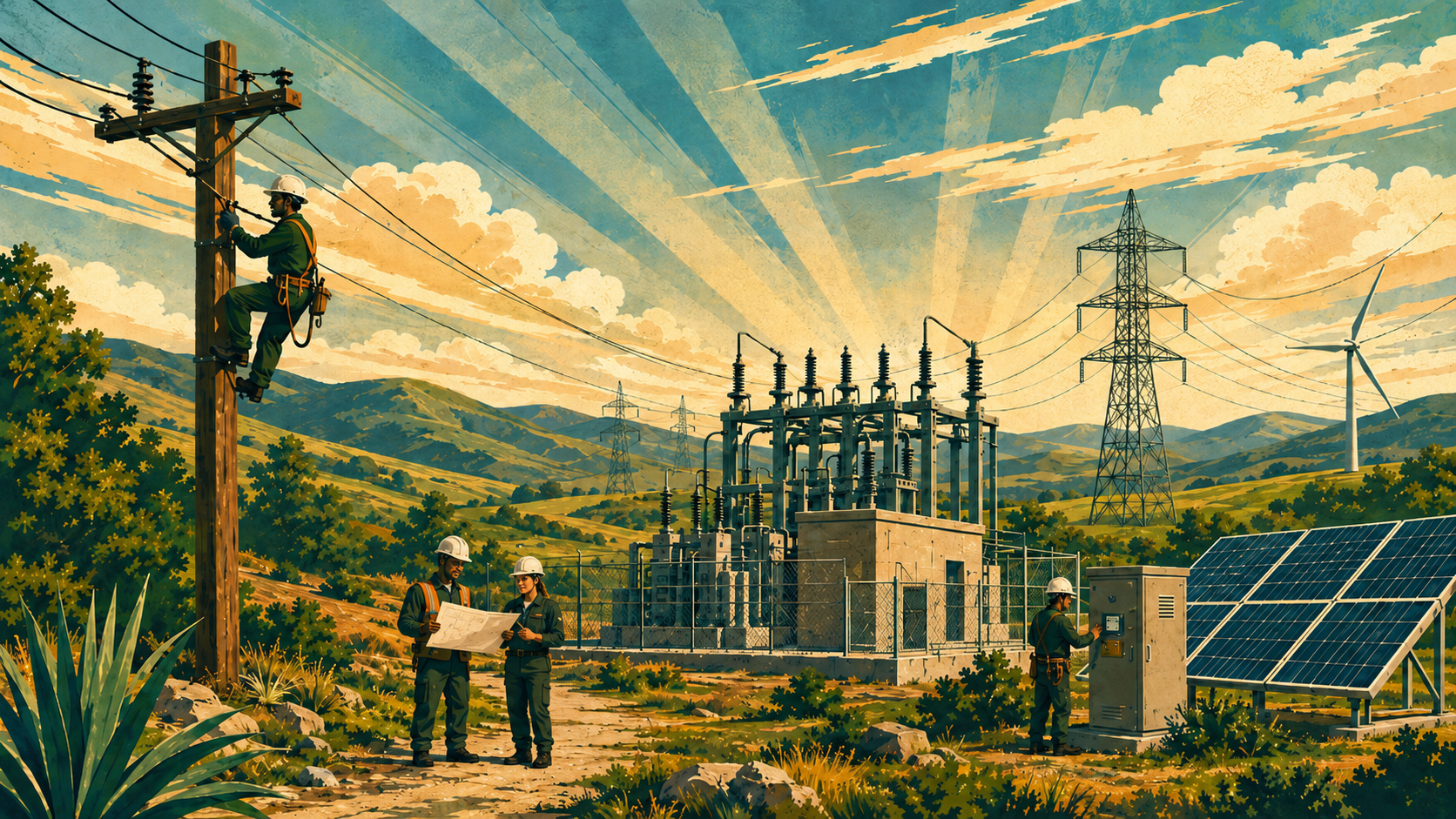
Billions of dollars are moving into the grid, the building stock, and the industrial base. The harder question is who will do the work.
Over the past year, CivicSol has been advising two very different energy clients on a shared challenge. In Alabama, we are helping the City of Birmingham design a youth apprenticeship program connected to a $2.1 billion buildout of grid modernization and industrial electrification. In Oregon, we are working with Energy Trust of Oregon on the workforce strategy behind its $2.55 billion, five-year plan for energy efficiency and renewable generation.
The engagements differ in scale and setting, but the lessons emerging from each are strikingly similar. In both places, the pace of energy work is now constrained by the supply of people qualified to do it.
And the deeper we got into the evidence, the less this looked like a story about “new green jobs” and the more it looked like one about old trades, small firms, and how skills are passed from one generation of workers to the next.
Three lessons stand out for any community with major energy investment on the horizon.
Traditional trades will carry this work. The question is who enters them next.
In Birmingham, electricians alone account for half of the workers needed over the next decade. Oregon’s projected growth concentrates in many of the same occupations: electricians, HVAC installers, and construction laborers. The credentials that sound new, including EV charging, solar installation, and heat pump specialties, are often add-on certifications layered onto an electrician or HVAC foundation. Some are measured in days. Beneath them is the same trade that IBEW locals have been training since the 1940s.
That changes what cities should look for. The assets that matter most are not waiting to be invented. They are joint apprenticeship training committees, community college trades programs, union halls, and contractor networks that many places have treated as legacy systems. They are strategic infrastructure now.
It also changes who the opportunity is for. The trades are aging. Nationally, about 84 percent of projected electrician openings come from retirements and workers changing occupations. In Birmingham, nearly half of the ten-year need is replacement demand. A retirement wave this large creates the widest opening in a generation to bring new people into these careers, because hiring at this scale requires reaching beyond traditional recruitment networks and because entry runs through apprenticeship seats that can be designed: who is recruited, where, and with what support.
Training scales through paid work, which makes the pipeline the real build.
A registered apprenticeship requires at least 2,000 hours of learning on the job, plus 144 hours of classroom instruction a year. Read those numbers again and the geography of the challenge shifts. Curriculum is not the scarce resource. National course catalogs and credentials already exist across the energy trades. What is scarce is the paid seat next to a journeyworker. That seat only exists if an employer creates it.
That makes the work a pipeline challenge in the fullest sense. Someone has to persuade employers to host learners. Someone has to fill the seats through pre-apprenticeship, career and technical education, counselors, parents, and community partners. And someone has to help apprentices stay in those seats.
Fewer than 35 percent of U.S. registered apprentices complete their programs. The leading reasons for leaving are transportation, family obligations, and economic strain. Skill is rarely the issue. The programs with the strongest completion records pay people from day one and treat support services as a core cost.
None of that coordination happens on its own. Apprenticeship Carolina grew from roughly 90 registered programs to more than 1,000 in a decade because a small state team absorbed much of the administrative burden for employers. Cities often fund the training and assume the rest will follow. In our experience, the rest is the work, and the first decision is structural: where the coordinating role lives, and who pays for it.
In a sector of small firms, growing the business is growing the workforce.
This is the lesson we did not expect, and the one we are testing next.
Energy Trust’s delivery system runs through roughly 1,900 trade allies, most of them small contracting firms with small margins. In a previous study, 28 percent of these firms reported being at their limit while 24 percent reported unused capacity, in the same network at the same time. The constraints contractors named had little to do with the supply of workers: scheduling, cash flow, and administrative friction. Some owners cannot release a worker for training without losing a crew. Others cannot reach the demand that already exists because the business itself has no room to grow.
This is where the first two lessons converge. Every new entrant to the trades has to pass through one of these businesses. If the firm is where on-the-job learning happens, then the firm’s capacity is workforce infrastructure, and an owner who cannot manage growth cannot host an apprentice. That reframes business coaching for contractors as a workforce intervention, one aimed at entrepreneurs rather than workers. The next phase of our Oregon work will test whether building firm capacity can open more training seats than funding training directly.
Why This Matters for Communities
Federal energy funding will keep shifting, and the vocabulary of green jobs and clean tech will rise and fall with it. The work underneath was never a funding program. Substations, industrial retrofits, heat pumps, and nuclear operations are infrastructure, driven by aging equipment, electrification, and load growth. Some segments will always move with policy; residential solar already is. The core of the work, in grids, buildings, and industry, does not follow an election cycle.
That is why the workforce question is the durable one. The system that moves people into these careers, including the trades institutions, feeder programs, intermediaries, and small firms that host the learning, is the asset that outlasts every funding cycle. The communities that build that system now will be the ones ready to deliver the next decade of work.
Cities often fund the training and assume the rest will follow. In our experience, the rest is the work.
more works in action
.png)












































Let’s turn your next big move into real momentum
Let's talk