let's connect

Birmingham has $2.1 billion in clean energy investment arriving before 2030 and an apprenticeship system currently training about 7% of the workers it will need to deliver on it. That gap, not the investment, is the story of the next five years.
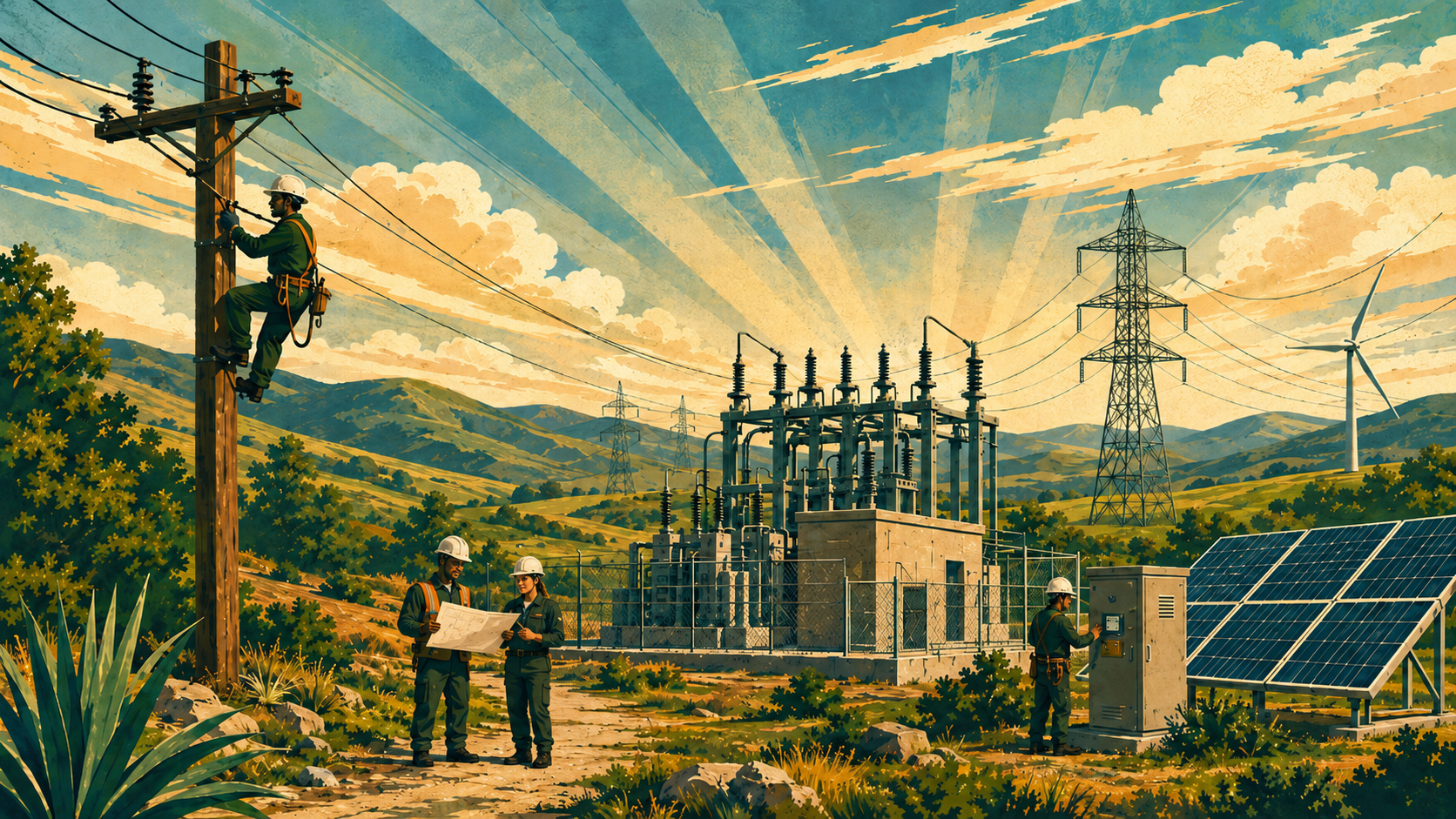
This is not a city starting from behind. Birmingham leads the country in grid electrification. Its specialization in electric power transmission and distribution outranks every comparable metro in America, and Southern Nuclear runs its operations from here. The investment now arriving, anchored by a foundry's switch to electric furnaces and a utility-scale grid-hardening program, plays directly to that strength. The question is whether the workforce will be ready in time. Construction demand peaks in 2027, and fifteen of the twenty-five trades the city will need have no active apprentices today.
With Energy Efficiency and Conservation Block Grant funding from the U.S. Department of Energy, Birmingham's Department of Innovation and Economic Opportunity set out to close that gap, and to make sure the careers it creates reach the young residents and neighborhoods earlier waves of growth passed by. CivicSol was brought in to build the evidence and the strategy behind it.
THE MOMENT
Birmingham's clean energy sector is strong but flat. It has grown 3% since 2015 while peer metros grew between 27% and 87%. Its specialization, once measured at a location quotient of 3.6, has slipped to 2.5, not because Birmingham declined but because everyone else moved faster. The incoming investment is the chance to reverse that. It is concentrated and time-bound, and larger than the local pipeline was ever built to handle. The work has to answer a short set of hard questions:
- Will Birmingham have the workers to build $2.1 billion in projects on the schedule those projects demand?
- Where is the demand actually concentrated, and which trades should the city train first?
- How does an apprenticeship system covering 7% of need scale before the 2027 peak?
- How do these careers reach young residents in communities that earlier growth left out?
THE CIVIC SOLUTION
CivicSol is building Birmingham's Green Economic Development Strategy and Youth Apprenticeship Program on evidence rather than assumption. The engagement is principal-led. Steven Pedigo and Laura Huffman are leading the workforce strategy, both drawing on decades in city management, alongside clean energy expertise from Dr. Michael Webber, former Chief Technology Officer of the cleantech fund Energy Impact Partners, and labor market analysis from Lightcast. The phased work moves from a hard look at demand to a program ready to launch:
- A demand forecast that sizes the need trade by trade and benchmarks Birmingham against seven peer metros, establishing how many workers are needed and exactly when.
- A supply-side assessment of training capacity, the region's community colleges, and the apprenticeship pipeline, separating where the system can deliver from where it cannot.
- Direct engagement with employers, trainers, and young people, sequenced so the program answers real hiring needs and real interests.
- An apprenticeship framework, curriculum, and pilot designed to launch on a defined timeline.
- An implementation roadmap built for the long term, with equity and durability treated as design requirements rather than add-ons.
THE IMPACT
The demand forecast gave Birmingham its first clear measure of the challenge: roughly 6,800 workers needed across 25 trades over the decade, with electricians alone accounting for half. Replacement of retiring and exiting workers, not growth, is the largest single driver, which means the need holds even if the sector never expands. That is the case for moving now, and moving at scale. The work will help Birmingham:
- Translate $2.1 billion in investment into local hiring instead of imported labor
- Train first for the trades where demand actually sits, led by electrical and line work
- Scale apprenticeship capacity ahead of the 2027 construction peak
- Open clean energy careers to residents and neighborhoods earlier growth bypassed
- Build pathways that outlast the build phase and carry into long-term operations
- Position Birmingham to capture the Southeast's wider nuclear and grid expansion, anchored by Southern Nuclear here
Many cities and regions are chasing the same clean energy investment. The ones that turn it into durable local careers will be the ones whose workforce was ready when it arrived. This work is how Birmingham gets ready.






.png)









































Let’s turn your next big move into real momentum
Let's talk