let's connect
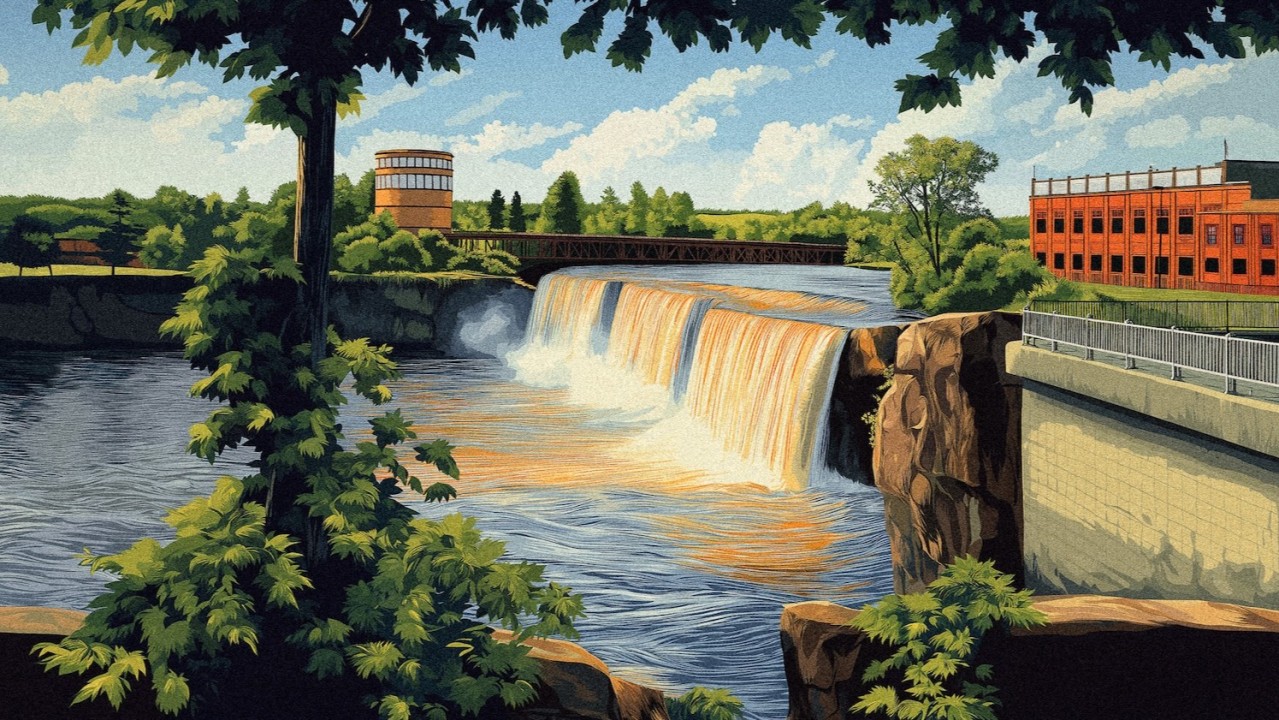
Last week at the University of Northern Iowa, Grow Cedar Valley convened civic leaders, employers, educators, and residents to unveil what was described as a population study. But the room understood this carried more weight than a demographic presentation.
This was about direction.
Over the past year, CivicSol partnered with Grow Cedar Valley to examine a question many Midwestern regions are quietly asking: why are we producing talent at scale yet struggling to retain it?
The data tells a clear story. The Waterloo–Cedar Falls metropolitan area generates $11.3 billion in Gross Regional Product and consistently outperforms its population rank in economic output. Traded sectors account for nearly half of economic activity while employing about one-third of the workforce. Educational attainment and enrollment are strong relative to peers.
Yet population growth has stalled. Net out-migration is concentrated among young and mid-career workers. Only 31 percent of in-migrants are ages 25 to 44. Per capita income trails national benchmarks.
The region is not lacking assets. It is experiencing misalignment.
One young resident captured it during engagement: “I love it here, but my degree won’t get me a job in this region. Everyone tells me I have to leave.”
This is not about climate or culture. It is about career architecture. The Cedar Valley’s challenge is not decline. It is unrealized potential.
Through twelve roundtables, dozens of interviews, a 23-member steering committee, and a World Café session with more than 125 stakeholders, one theme surfaced repeatedly. The region has strong civic culture and willingness to collaborate. What it lacks are the coordination structures that convert goodwill into sustained alignment.
Stakeholders described working hard but often in parallel. Cities pursue initiatives independently. Employers engage workforce programs individually. Institutions market themselves without a shared regional narrative. The result is fragmentation.
The five-year strategy, “The Cedar Valley — Count Me In,” moves from fragmentation to alignment around three interdependent big bets.
First, regional coordination. Acting like one region requires governance clarity, shared data, unified priorities, coordinated housing tools, and the capacity within Grow Cedar Valley to serve as a true integrator.
Second, economic modernization. Manufacturing remains foundational, but legacy strength alone will not retain the next generation. Advanced manufacturing, technology adoption, and innovation capacity must define the next chapter.
Third, careers worth staying for. Talent retention depends on visible advancement pathways, sector partnerships, earn-and-learn models, and deliberate wage growth.
Together, these commitments shift the region from episodic initiatives to systems thinking. Brand alignment strengthens attraction. Innovation supports wages. Wages support housing. Career pathways reinforce retention.
What stood out at the unveiling was not alarm. It was resolve. The Cedar Valley enters this moment with infrastructure capacity, educational excellence, demographic renewal, and civic leadership willing to engage hard questions. The missing ingredient has been sustained alignment.
For other Midwestern regions, the lesson is clear. Coordination is economic strategy. Talent retention is a systems outcome.
“The Cedar Valley — Count Me In” reflects a region choosing to organize differently in order to compete differently.
Count them in.




.png)




















Let’s turn your next big move into real momentum
Let's talk